Megawatt Charging Systems (MCS)
Specialist electrical design for Megawatt Charging Systems, supporting high-power charging infrastructure for eHGVs, coaches, buses and heavy fleet vehicles. MCS enables megawatt-scale charging, with the standard supporting up to 1,500 V DC and 3,000 A. This creates new design challenges around grid capacity, HV & LV distribution, cable thermal performance, protection and site infrastructure.
At a glance
- The Megawatt Charging System (MCS) is a new international charging standard developed specifically for heavy-duty electric vehicles, including HGVs, coaches and buses.
- Published in the UK as PD IEC TS 63379:2026, the standard defines a new high-power connector system capable of supporting operating voltages of up to 1,500 V DC and continuous charging currents of up to 3,000 A, providing a theoretical charging capability of up to 4.5 MW.
- Whilst the standard establishes the maximum operating envelope, many heavy-duty vehicle manufacturers are currently developing platforms based around 1,000 V DC architectures, with first-generation MCS installations expected to operate at substantially lower power levels than the theoretical maximum.
- MCS infrastructure can require electrical capacities measured in multiple megawatts, often exceeding those of many industrial facilities.
- EV Design supports clients at the earliest stages of MCS project development, including grid capacity assessments, DNO and iDNO application support, site feasibility, electrical infrastructure planning and technical due diligence.
Megawatt Charging Systems (MCS)
The Megawatt Charging System (MCS) is a new international charging standard developed specifically for heavy-duty electric vehicles, including HGVs, coaches and buses. Published in the UK as PD IEC TS 63379:2026, the standard defines a new high-power connector system capable of supporting operating voltages of up to 1,500 V DC and continuous charging currents of up to 3,000 A, providing a theoretical charging capability of up to 4.5 MW.
Whilst the standard establishes the maximum operating envelope, many heavy-duty vehicle manufacturers are currently developing platforms based around 1,000 V DC architectures, with first-generation MCS installations expected to operate at substantially lower power levels than the theoretical maximum. Tesla is widely expected to adopt an electrical architecture of approximately 1,250 V DC for the Tesla Semi. Higher voltage MCS applications are more likely to be adopted initially within the mining, aviation and port sectors, where vehicle energy demand, operational duty cycles and power requirements are significantly greater.
For electrical engineers, MCS represents far more than simply installing higher-power chargers. The increased electrical demand introduces new engineering challenges in grid capacity, HV and LV electrical distribution, AC and DC cabling design, cable thermal performance, protection studies, earthing design, equipment layouts and future infrastructure planning. Delivering safe, compliant and scalable MCS infrastructure requires specialist electrical engineering from the earliest stages of a project.
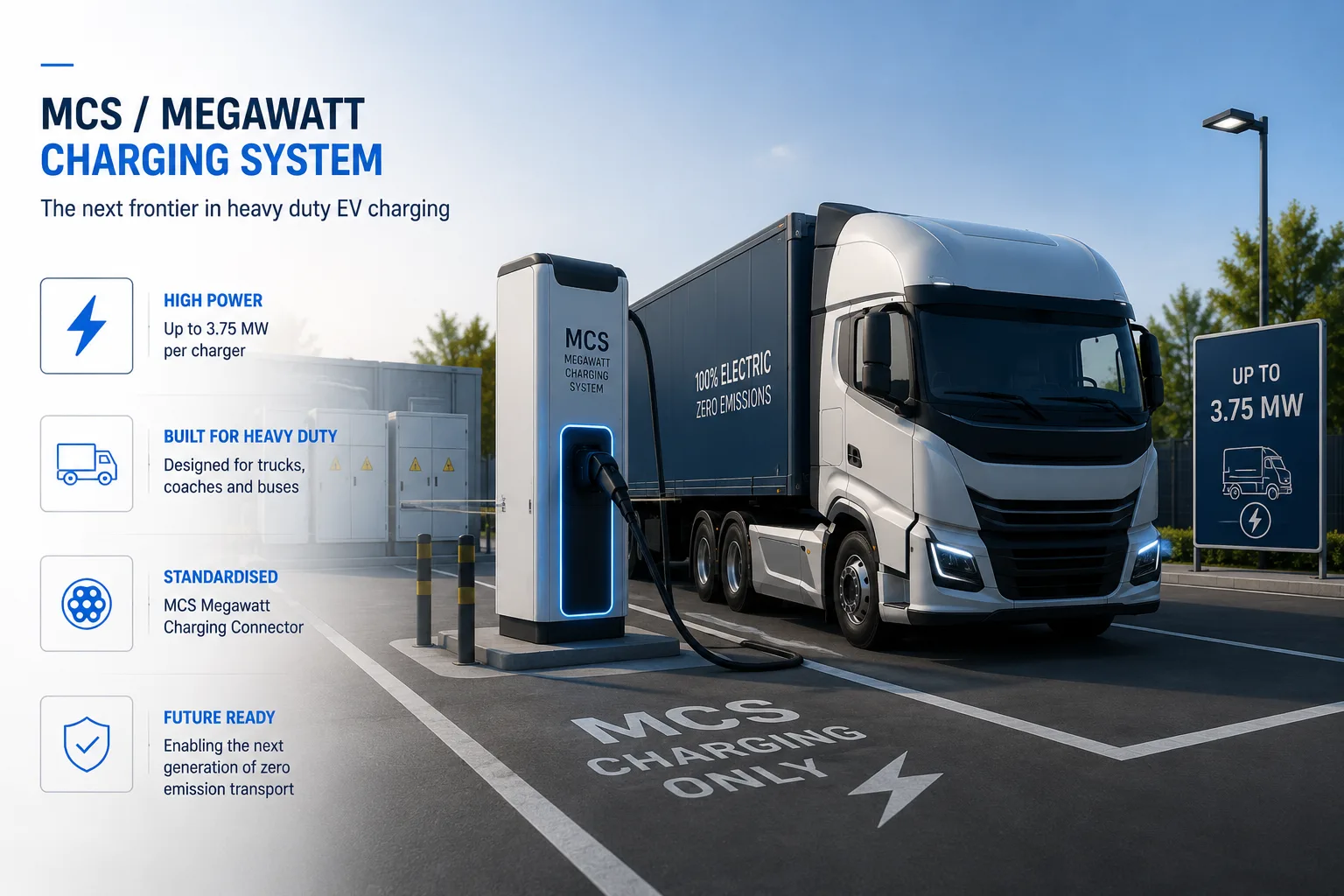
Up to 4.5 MW
Up to 1,500 V DC
Typically around 1,000 V DC
Approximately 1,250 V DC
Up to 3,000 A
ISO 15118-20
The technical challenges of MCS infrastructure design
Grid Capacity & Network Connections
MCS infrastructure can require electrical capacities measured in multiple megawatts, often exceeding those of many industrial facilities. Early assessment of grid capacity, connection strategy and DNO or iDNO requirements is essential to determine the most practical and cost-effective solution for the site.
High-Power Electrical Distribution
MCS installations demand robust HV and LV electrical distribution systems capable of supporting sustained high-current operation. Distribution design includes switchgear selection, AC and DC cabling design, protection coordination, cable thermal analysis to IEC 60287, earthing design and equipment integration to ensure a safe and reliable installation.
Site Infrastructure & Cable Routing
Unlike conventional EV charging, MCS infrastructure requires careful planning of equipment compounds, feeder pillars, transformer locations, duct routes and high-current cable systems. Site layouts must balance vehicle movements, maintenance access, cable routing and future expansion from the earliest stages of design.
Future-Proof Infrastructure
The MCS standard provides a framework for future megawatt-scale charging, but vehicle platforms, charger outputs and supporting infrastructure continue to evolve. Designing electrical infrastructure with flexibility for future expansion helps reduce the need for major upgrades as charging technology develops.
Grid connection and planning lead times can be significant
Securing electrical capacity for a multi-megawatt MCS installation is rarely a quick process. DNO and iDNO applications, network reinforcement, planning considerations and site infrastructure upgrades can all influence programme, cost and viability.
Early feasibility work allows clients to understand available capacity, likely connection routes, infrastructure constraints and project risks before committing to significant capital expenditure.
EV Design supports clients at the earliest stages of MCS project development, including grid capacity assessments, DNO and iDNO application support, site feasibility, electrical infrastructure planning and technical due diligence.
Discuss your MCS projectMegawatt charging: common questions
What is the Megawatt Charging System (MCS)?
The Megawatt Charging System (MCS) is a new international charging standard developed specifically for heavy-duty electric vehicles, including HGVs, coaches and buses. Published in the UK as PD IEC TS 63379:2026, the standard defines a new high-power connector system capable of supporting operating voltages of up to 1,500 V DC and continuous charging currents of up to 3,000 A, providing a theoretical charging capability of up to 4.5 MW.
What voltage and power will the first megawatt charging installations operate at?
Whilst the standard establishes the maximum operating envelope, many heavy-duty vehicle manufacturers are currently developing platforms based around 1,000 V DC architectures, with first-generation MCS installations expected to operate at substantially lower power levels than the theoretical maximum. Tesla is widely expected to adopt an electrical architecture of approximately 1,250 V DC for the Tesla Semi.
What does megawatt charging mean for grid connection and site design?
MCS infrastructure can require electrical capacities measured in multiple megawatts, often exceeding those of many industrial facilities. Early assessment of grid capacity, connection strategy and DNO or iDNO requirements is essential to determine the most practical and cost-effective solution for the site.
Why should the grid connection be looked at early in a megawatt charging project?
Securing electrical capacity for a multi-megawatt MCS installation is rarely a quick process. DNO and iDNO applications, network reinforcement, planning considerations and site infrastructure upgrades can all influence programme, cost and viability. Early feasibility work allows clients to understand available capacity, likely connection routes, infrastructure constraints and project risks before committing to significant capital expenditure.
What does an MCS design service include?
EV Design supports clients at the earliest stages of MCS project development, including grid capacity assessments, DNO and iDNO application support, site feasibility, electrical infrastructure planning and technical due diligence.
Ready to start your EV charging project?
Talk to us about feasibility, electrical design and technical support for your EV charging project, UK wide.
What an EV charging consultant does