
eHGV Charging Infrastructure Design
Specialist electrical design for eHGV charging infrastructure, supporting depot, logistics and en-route charging projects from feasibility and grid capacity assessment through to detailed design and construction support.
At a glance
- EV Design provides specialist electrical design for eHGV charging infrastructure, supporting clients from feasibility and grid capacity assessment through to detailed design, tender information and construction stage technical support.
- Electrifying heavy goods vehicle fleets is not simply a matter of scaling up standard EV charging infrastructure.
- eHGV charging projects often involve high power DC charging equipment, grouped cable routes, feeder pillars, equipment compounds and larger electrical distribution systems.
- Every project is developed in accordance with BS 7671, the IET Code of Practice for Electric Vehicle Charging Equipment Installation, applicable DNO requirements and manufacturer guidance.
eHGV charging requires a different electrical design approach
Electrifying heavy goods vehicle fleets is not simply a matter of scaling up standard EV charging infrastructure. Higher charging loads, depot operating patterns, grid capacity, cable routes, protection requirements and equipment selection all need to be considered together from the earliest design stages.
eHGV charging projects often involve high power DC charging equipment, grouped cable routes, feeder pillars, equipment compounds and larger electrical distribution systems. These installations require careful assessment of electrical capacity, protective measures, cable thermal performance and DNO or iDNO connection requirements.
EV Design provides specialist electrical design for eHGV charging infrastructure, supporting clients from feasibility and grid capacity assessment through to detailed design, tender information and construction stage technical support.
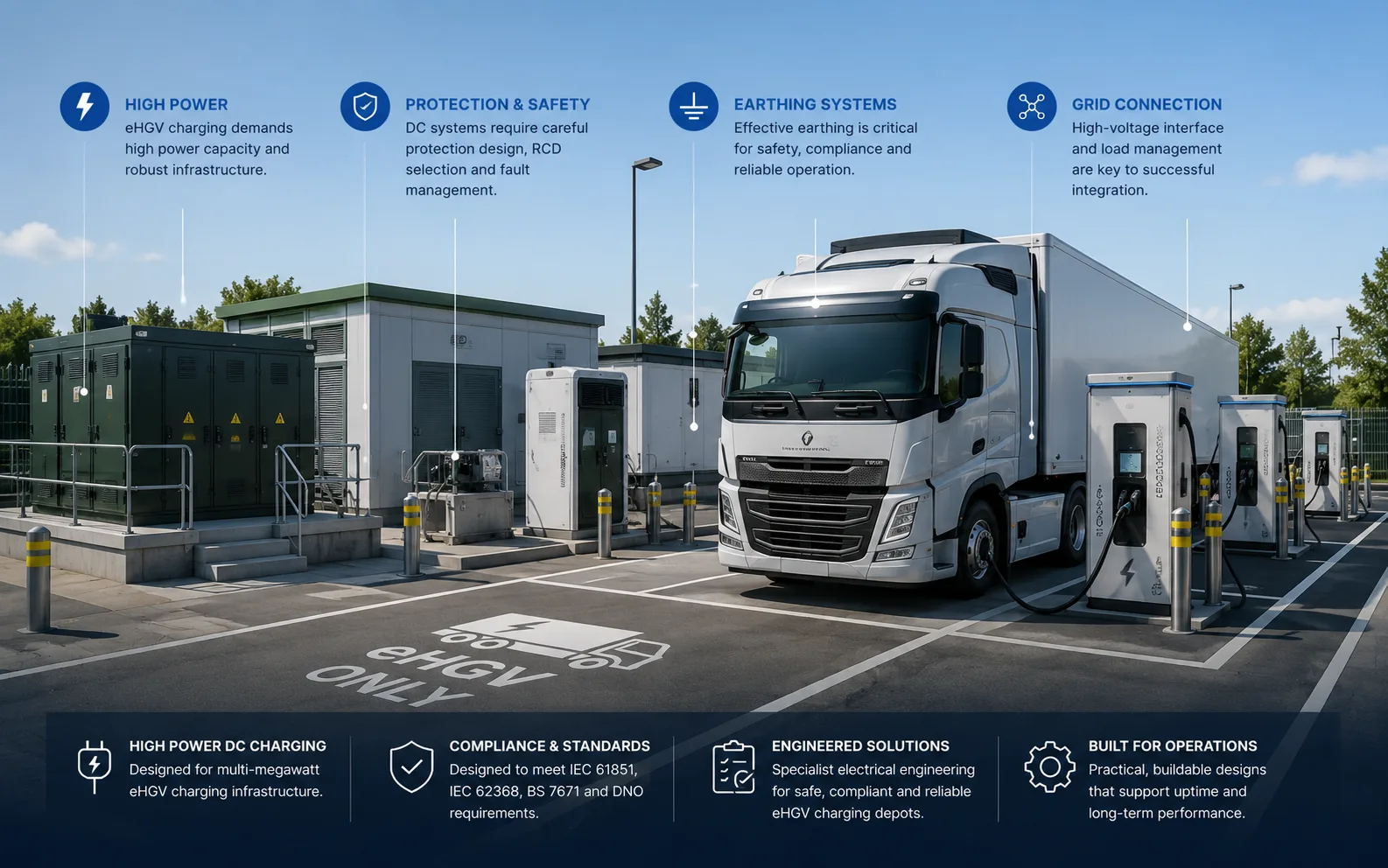
The engineering depth eHGV projects demand
High-Power DC Charging Infrastructure
High-power eHGV charging installations often comprise multiple DC chargers operating simultaneously, creating significant electrical demand. Careful assessment of electrical capacity, diversity, cable sizing, protection coordination and equipment selection is essential to deliver a safe, reliable and buildable installation.
Earthing & Protective Measures
High-power charging installations require careful consideration of earthing arrangements and protective measures. The appropriate solution will depend on the characteristics of the incoming electrical supply, charging equipment and site-specific requirements, with TT systems designed where required.
Protection Design & DC Fault Current Considerations
DC charging equipment introduces additional protection considerations beyond conventional electrical installations. Correct selection of protective devices, residual current protection and assessment of DC fault current effects are essential to achieve compliance with BS 7671, the EV Charging Code of Practice and manufacturer requirements.
Grid Connections & HV/LV Interfaces
Larger eHGV charging developments frequently require substantial electrical supplies, which may involve new HV connections, private substations or upgrades to existing network infrastructure. Early assessment of grid capacity and coordination with DNOs, iDNOs and ICPs is often critical to project delivery.
Electrical Infrastructure Layout
eHGV charging infrastructure requires careful integration of feeder pillars, switchgear, equipment compounds, cable routes and charging equipment within the wider site layout. Good infrastructure planning supports safe access, future maintenance and efficient project delivery.
Grid Capacity & Connection Applications
Securing adequate electrical capacity is often one of the longest lead items on an eHGV charging project. EV Design supports clients with grid capacity assessments, DNO and iDNO application submissions, and the technical information required to progress new or upgraded electrical connections.
Complete eHGV Charging Design Package
Our eHGV charging design service supports projects from initial feasibility and grid capacity assessment through to detailed electrical design, tender documentation and construction stage technical support. Every project is developed in accordance with BS 7671, the IET Code of Practice for Electric Vehicle Charging Equipment Installation, applicable DNO requirements and manufacturer guidance.
- Feasibility studies and grid capacity assessments
- eHGV charging site layout drawings
- Load and electrical capacity assessments
- Charger technical reviews and specification
- AC & DC cable sizing and distribution design
- IEC 60287 cable thermal analysis, where required
- Protection and fault level studies
- Feeder pillar selection and design
- RCD selection and DC blinding assessments
- TT earthing system design, where required
- DNO and iDNO application support
- Associated site lighting design
- Electrical tender drawings and specifications
- Construction stage technical support
Logistics & Distribution
- Distribution centres
- Supermarket and retail logistics
- Parcel and courier depots
- Cold storage and temperature-controlled facilities
Haulage & Transport
- Long-haul HGV depots
- Regional haulage depots
- Container ports
- Rail freight terminals
Public Sector
- Local authority vehicle depots
- Refuse collection fleets
- Highway maintenance depots
- Emergency services vehicle depots
En-Route Infrastructure
- Motorway service areas
- Truck stops and service facilities
- Border control and customs facilities
- Strategic freight corridors
eHGV charging design: common questions
What is eHGV charging infrastructure design?
EV Design provides specialist electrical design for eHGV charging infrastructure, supporting clients from feasibility and grid capacity assessment through to detailed design, tender information and construction stage technical support.
Why is eHGV charging different from standard EV charging?
Electrifying heavy goods vehicle fleets is not simply a matter of scaling up standard EV charging infrastructure. Higher charging loads, depot operating patterns, grid capacity, cable routes, protection requirements and equipment selection all need to be considered together from the earliest design stages.
What does an eHGV charging design package include?
Our eHGV charging design service supports projects from initial feasibility and grid capacity assessment through to detailed electrical design, tender documentation and construction stage technical support.
Which standards does eHGV charging design follow?
Every project is developed in accordance with BS 7671, the IET Code of Practice for Electric Vehicle Charging Equipment Installation, applicable DNO requirements and manufacturer guidance.
Will an eHGV charging site need a new grid connection or substation?
Larger eHGV charging developments frequently require substantial electrical supplies, which may involve new HV connections, private substations or upgrades to existing network infrastructure. Early assessment of grid capacity and coordination with DNOs, iDNOs and ICPs is often critical to project delivery.
Does EV Design support DNO or iDNO connection applications for eHGV sites?
Securing adequate electrical capacity is often one of the longest lead items on an eHGV charging project. EV Design supports clients with grid capacity assessments, DNO and iDNO application submissions, and the technical information required to progress new or upgraded electrical connections.
Other services
Ready to start your EV charging project?
Talk to us about feasibility, electrical design and technical support for your EV charging project, UK wide.
What an EV charging consultant does