
EV Charging Infrastructure Design
Electrical design support for AC and DC EV charging infrastructure, from early feasibility and site layouts through to construction ready tender information.
The right charging technology, correctly designed
Selecting the right charging technology is fundamental to a successful EV charging project. The appropriate solution depends on vehicle dwell time, charging demand, available electrical capacity, operational requirements and future expansion plans.
AC charging is typically suited to locations where vehicles remain parked for longer periods, including workplaces, residential developments, retail destinations and overnight fleet depots. DC charging is suited to applications requiring faster energy transfer, from public and destination charging through to fleet operations, logistics facilities and high-power charging hubs.
EV Design provides specialist electrical design for AC and DC charging infrastructure, supporting projects from feasibility studies and site layouts through to load and capacity assessments, DNO and iDNO application support, protection studies, electrical tender information and construction stage technical support.
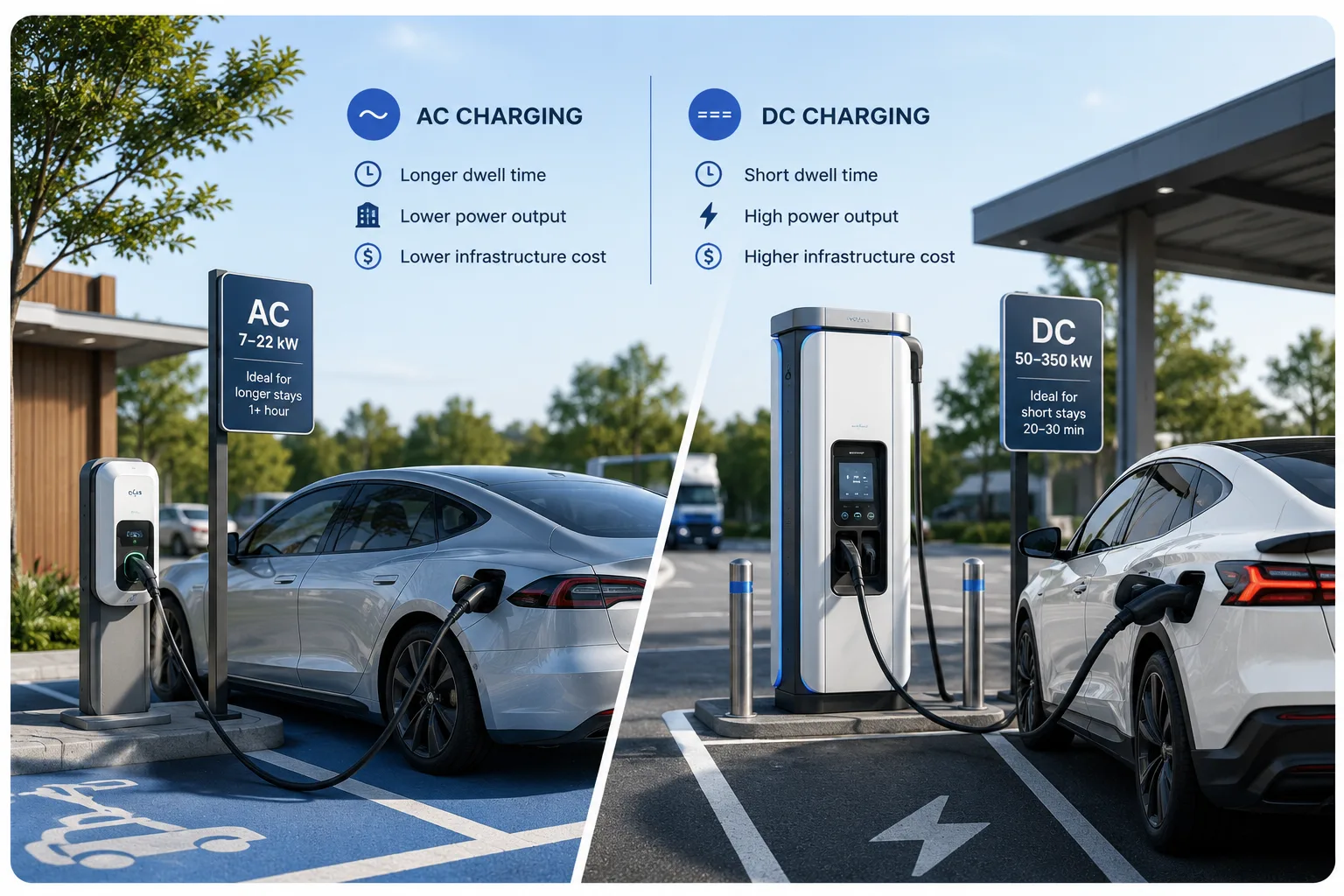
AC charging design and DC rapid charging design
Typically 3.6 kW to 22 kW per charge point
AC charging design for workplace, residential, retail, destination, fleet and public sector developments. Covers single-phase and three-phase charging installations, including higher power AC systems where required, with load management strategies for multi-point charging infrastructure.
- Feasibility studies and site assessments
- EV charging site layout drawings
- Charger technical reviews
- Load and electrical capacity assessments
- AC cable sizing and distribution design
- RCD selection and DC blinding assessments
- TT earthing system design, where required
- DNO and iDNO application support
- Electrical tender drawings and specifications
- Construction stage technical support
Typically 50 kW and above
DC rapid and ultra-rapid charging design for public charging hubs, retail destinations, fleet depots, logistics facilities, forecourts and commercial developments. Higher power charging installations require greater consideration of electrical capacity, protection, cable thermal performance and utility connections.
- Feasibility studies and site assessments
- EV charging site layout drawings
- Charger technical reviews
- Load and electrical capacity assessments
- AC & DC cable sizing and distribution design
- Duct route and containment design
- Feeder pillar selection and design
- Associated site lighting design
- IEC 60287 thermal analysis, where required
- Protection and fault level studies
- RCD selection and DC blinding assessments
- TT earthing system design, where required
- DNO and iDNO application support
- Electrical tender drawings and specifications
- Construction stage technical support
EV charging across every sector
Commercial & Retail
- Office and business parks
- Retail destinations and shopping centres
- Hotels and leisure facilities
- Multi-storey and surface car parks
Residential
- Multi-unit residential developments (MURBs)
- Housing developments
- Apartment buildings
- Social and affordable housing
Fleet & Logistics
- Company car and commercial vehicle fleets
- Overnight depot charging
- Logistics and distribution centres
- eHGV charging depots
Public Sector
- Local authority infrastructure
- NHS and healthcare estates
- Schools, colleges and universities
- Government and civic buildings
Charge Point Operators (CPOs)
- Public charging hubs
- Forecourt charging
- Destination charging
- EV charging networks
Ready to start your EV charging project?
Talk to us about feasibility, electrical design and technical support for your EV charging project, UK wide.
What an EV charging consultant does